

Your website is your digital storefront, but if it looks like everyone else's, you're invisible. Small businesses often settle for generic templates that fail to capture their unique brand or convert visitors into customers. Custom website development solves this by creating tailored digital experiences that reflect your identity and drive measurable results. This guide walks you through the complete process, from identifying problems with off-the-shelf solutions to building, optimizing, and verifying a high-performing custom website that sets you apart.
Table of Contents
- Understanding The Problem: Why Generic Websites Fall Short
- Preparing For Custom Website Development: Key Prerequisites And Planning
- Executing The Development: Design, Construction, And Optimization Tactics
- Verifying Success: Measuring Performance And Ongoing Improvements
- Enhance Your Custom Website With Expert Design Services
- Frequently Asked Questions
Key takeaways
| Point | Details |
|---|---|
| Custom branding | Tailored design creates memorable user experiences that generic templates cannot match. |
| Conversion optimization | Strategic A/B testing can double revenue without increasing traffic costs. |
| Mobile performance | Optimized mobile experiences close the conversion gap between desktop and mobile users. |
| Core Web Vitals | Fast loading and stability directly improve SEO rankings and user satisfaction. |
| Accessibility matters | Reducing errors expands your audience and ensures compliance with modern standards. |
Understanding the problem: why generic websites fall short
Generic website templates promise quick setup and low cost, but they deliver mediocre results. These cookie-cutter solutions lack the flexibility to express your brand's personality, leaving visitors with no compelling reason to remember you or trust your business over competitors. When every site in your industry looks identical, you blend into the background instead of standing out.
The conversion problem runs deeper than aesthetics. Average eCommerce conversion rates sit at 2.5% with top performers hitting 5.5%. That gap represents millions in potential revenue left on the table. Generic sites rarely provide the tools or flexibility needed to test, refine, and optimize the user journey. You're stuck with someone else's assumptions about what works, not data-driven decisions tailored to your audience.
Mobile performance exposes another critical weakness. Mobile visitors convert at half the rate of desktop users, signaling poor mobile user experience in most template-based sites. Clunky navigation, slow loading, and layouts that don't adapt properly frustrate users who increasingly browse and buy from phones. If your site isn't optimized for mobile from the ground up, you're alienating the majority of your traffic.
Accessibility issues compound these problems. Studies show home page complexity grew to 1,257 elements with 51 accessibility errors detected per top 1 million sites. These errors don't just exclude people with disabilities; they create friction for all users and hurt your search rankings. Generic templates often ignore accessibility standards, leaving you vulnerable to legal risks and missing out on a significant portion of potential customers.
Common issues with generic websites:
- Limited customization options force you to compromise on brand identity
- Poor mobile optimization drives away half your potential customers
- No built-in tools for systematic conversion rate testing
- Accessibility barriers reduce engagement and expose legal risks
- Slow loading times hurt both user experience and search visibility
Generic templates are designed for everyone, which means they're optimized for no one. Your business deserves a website built specifically for your goals, your audience, and your brand.
Preparing for custom website development: key prerequisites and planning
Successful custom development starts long before writing a single line of code. You need absolute clarity on what makes your brand unique and what actions you want visitors to take. Generic goals like "increase sales" won't cut it. Define specific conversion targets: newsletter signups, product purchases, consultation bookings, or whatever drives your business model. These goals shape every design and development decision.

Choosing the right technical foundation matters more than most businesses realize. Modern frameworks and hosting platforms offer different tradeoffs between performance, maintainability, and cost. Cloudflare Workers deliver edge computing speed but require specialized knowledge. Vercel provides excellent developer experience with solid performance for most use cases. Your choice depends on your specific performance requirements, budget, and long-term maintenance plans.
Core Web Vitals aren't optional anymore. Google uses Largest Contentful Paint (under 2.5 seconds), First Input Delay (less than 100 milliseconds), and Cumulative Layout Shift (0.1 or lower) as ranking factors. More importantly, these metrics directly impact user experience. A slow, janky website frustrates visitors regardless of how beautiful the design looks. Build performance optimization into your foundation rather than treating it as an afterthought.
Accessibility planning prevents expensive retrofitting later. Home page complexity and accessibility errors have grown significantly, but you can avoid these pitfalls with upfront planning. Choose semantic HTML, ensure keyboard navigation works everywhere, provide text alternatives for images, and maintain sufficient color contrast. These aren't just checkboxes for compliance; they're fundamental to creating an inclusive experience that serves all potential customers.
Essential planning steps:
- Document your brand voice, visual identity, and key differentiators in detail
- Map out your ideal customer journey from first visit to conversion
- Select technical stack based on performance needs and maintenance capabilities
- Set specific, measurable conversion goals for each page type
- Establish Core Web Vitals targets and accessibility standards from day one
Pro Tip: Create a detailed style guide before development begins. Document your color palette, typography, spacing system, and component patterns. This guide becomes your single source of truth, ensuring consistency across every page and making future updates much easier.
Executing the development: design, construction, and optimization tactics
Custom design starts with your brand identity, not with browsing template galleries. Your visual language should communicate your values and differentiate you from competitors at first glance. Color psychology, typography choices, spacing, and imagery all work together to create emotional resonance. Don't copy what competitors do; identify what makes your approach unique and amplify it through design.
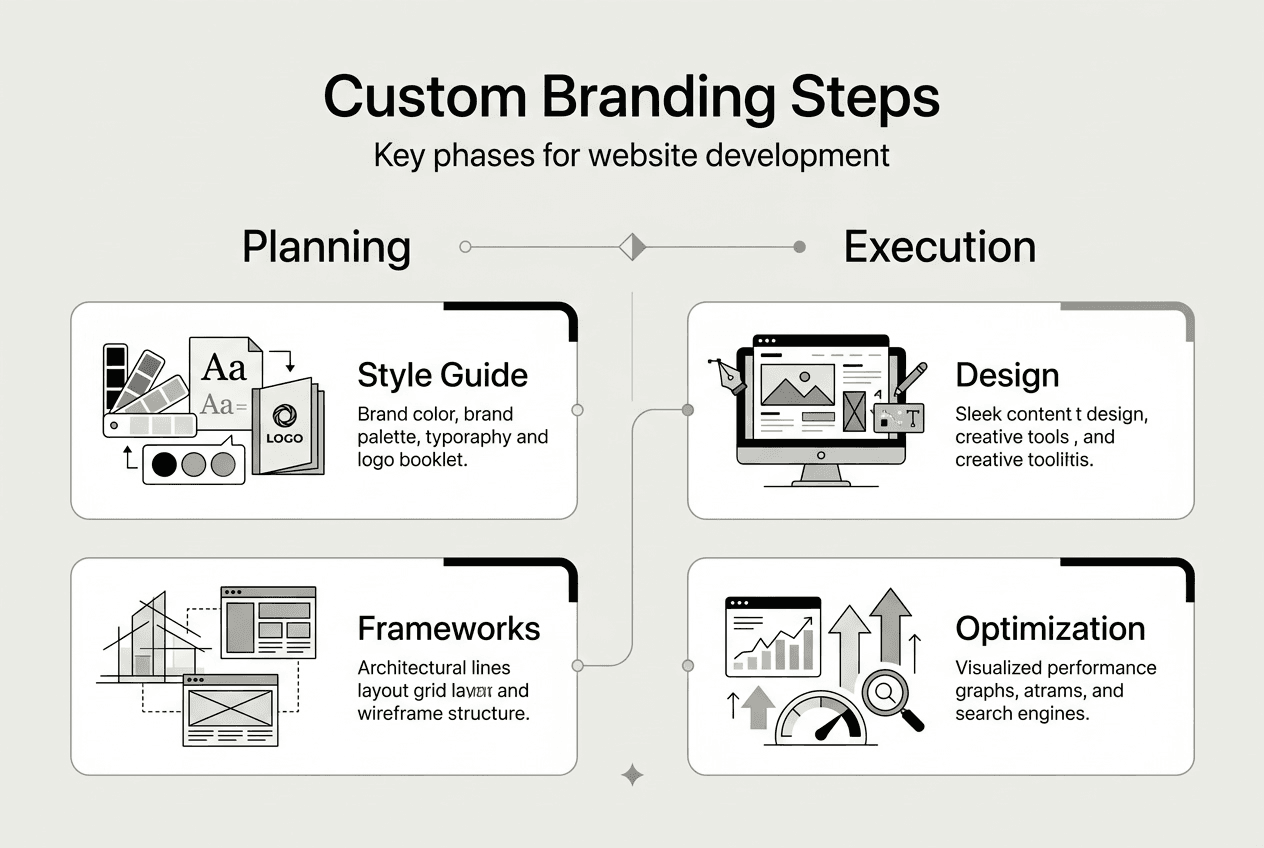
Modern development frameworks enable both performance and maintainability when used correctly. Component-based architecture lets you build reusable pieces that maintain consistency while allowing flexibility where needed. Server-side rendering improves initial load times. Code splitting ensures users only download what they need for each page. These technical choices compound into significant performance advantages over bloated, monolithic templates.
Performance tuning separates good custom sites from great ones. Optimize images with modern formats like WebP or AVIF. Implement lazy loading for below-the-fold content. Minimize JavaScript execution time. Use a content delivery network to serve assets from locations closest to your users. Every millisecond matters because users abandon slow sites before they even see your content.
Systematic A/B testing is the proven method to significantly close the gap between average and top conversion rates. Start with high-intent pages like product details and checkout where small improvements create outsized revenue impact. Test one variable at a time: headlines, call-to-action buttons, form fields, images, or layouts. Let tests run until you reach statistical significance, then implement winners and move to the next hypothesis.
Development execution checklist:
- Build design system with reusable components and clear documentation
- Implement responsive layouts that adapt seamlessly across all device sizes
- Optimize asset delivery with compression, modern formats, and CDN distribution
- Set up A/B testing infrastructure on conversion-critical pages
- Configure analytics to track user behavior and conversion funnels accurately
- Test thoroughly across browsers, devices, and accessibility tools before launch
| Hosting Option | Best For | Key Advantage | Consideration | | --- | --- | --- | | Cloudflare Workers | High-traffic sites needing edge computing | Ultra-fast global response times | Requires serverless architecture expertise | | Vercel | Modern frameworks with frequent updates | Excellent developer experience and previews | Cost scales with usage | | Traditional VPS | Full control over environment | Complete customization freedom | Requires server management skills |
Research shows optimizing Core Web Vitals improved organic impressions and clicks, proving that performance work delivers tangible SEO benefits. But the real payoff comes from user experience improvements that reduce bounce rates and increase engagement. Fast, stable sites feel professional and trustworthy, encouraging visitors to explore more pages and complete desired actions.
Pro Tip: Implement feature flags in your codebase to enable A/B testing without deploying new code for each experiment. This approach lets you test variations quickly, roll back instantly if needed, and gradually release winning changes to your entire audience.
Verifying success: measuring performance and ongoing improvements
Launching your custom website is just the beginning. Real success comes from systematic measurement and continuous optimization based on actual user behavior. Analytics tools reveal how visitors navigate your site, where they get stuck, and which paths lead to conversions. Set up conversion funnels for each key action to identify exactly where potential customers drop off.
Core Web Vitals monitoring must be continuous, not a one-time check. Real user metrics from actual visitors matter more than lab tests on your development machine. Tools like Google Search Console show how your site performs in the wild across different devices, networks, and locations. Large improvements in Core Web Vitals can increase organic impressions and clicks, making ongoing monitoring a direct investment in traffic growth.
Accessibility audits shouldn't stop at launch either. As you add new features and content, new barriers can creep in. Regular automated scans catch obvious issues like missing alt text or poor color contrast. Manual testing with screen readers and keyboard navigation reveals subtler problems that automated tools miss. Every error you fix expands your potential audience and improves the experience for all users.
Conversion rate benchmarking gives you realistic targets for improvement. The average landing page conversion rate is 6.6% across industries, but this varies significantly by sector and traffic source. Compare your rates against industry-specific benchmarks to identify opportunities. If you're converting at 3% when competitors average 7%, you know exactly how much room exists for optimization.
Ongoing verification process:
- Review analytics weekly to spot trends and anomalies in user behavior
- Monitor Core Web Vitals monthly and investigate any degradation immediately
- Conduct accessibility audits quarterly using both automated tools and manual testing
- Compare conversion rates against industry benchmarks and your own historical data
- Run continuous A/B tests on underperforming pages to systematically improve results
Iteration based on data separates websites that plateau from those that continuously improve. Each A/B test teaches you something about your audience. Each performance optimization compounds with previous improvements. Each accessibility fix opens your site to more potential customers. This ongoing refinement process, not the initial launch, determines your long-term success.
Pro Tip: Create a performance budget that sets maximum limits for page weight, JavaScript execution time, and Core Web Vitals metrics. Integrate these checks into your deployment process so that performance regressions get caught before they reach production.
Enhance your custom website with expert design services
Building a custom website that truly differentiates your brand and maximizes conversions requires specialized expertise across design, development, and optimization. While this guide provides the roadmap, executing it effectively demands significant time and technical knowledge that most business owners don't have.

Professional web designers translate your brand identity into cohesive visual experiences that resonate with your target audience. They apply proven conversion rate optimization strategies from the start, building testing infrastructure and performance optimization into the foundation rather than bolting them on later. This approach saves months of trial and error while ensuring your site launches with best practices already implemented.
Partnering with an experienced web designer gives you access to specialized skills without building an in-house team. You get tailored solutions that fit your specific business model, ongoing support to maintain peak performance, and strategic guidance as your digital needs evolve. The right partnership transforms your website from a static brochure into a dynamic asset that generates measurable business results.
Frequently asked questions
What is custom website development and why is it important?
Custom website development means building a site tailored specifically to your brand identity, user needs, and business goals rather than using generic templates. It's important because it enables unique branding that differentiates you from competitors, optimized user experiences that increase conversions, and flexibility to implement exactly the features your business requires. Generic templates force compromises that limit your potential.
How can custom websites improve conversion rates?
Custom websites enable targeted user experience improvements and systematic testing that generic sites cannot support. You can optimize every element of the customer journey based on your specific audience behavior rather than accepting someone else's assumptions. A/B testing on custom pages lets you identify what resonates with your visitors and double conversion rates without spending more on traffic acquisition.
What core web vitals metrics should I prioritize for my website?
Focus on three key metrics: Largest Contentful Paint under 2.5 seconds for fast perceived loading, First Input Delay less than 100 milliseconds for responsive interactivity, and Cumulative Layout Shift of 0.1 or lower for visual stability. These metrics directly impact user experience by ensuring your site feels fast and stable. Google also uses them as ranking factors, making them essential for both user satisfaction and search visibility.
Why is accessibility important in website development?
Accessibility ensures people with disabilities can use your website, immediately expanding your potential customer base by millions. Beyond inclusion, accessible sites provide better experiences for everyone through clearer navigation, readable text, and logical structure. Meeting accessibility standards also protects you from legal risks as regulations continue tightening. Reduced errors improve engagement metrics and indirectly benefit your search rankings.