

Users form impressions of your website in just 50 milliseconds, and branding drives that instant judgment. For tech startups, branding isn't just about logos or color schemes. It shapes messaging, emotional connection, and user experience. This guide reveals how strategic branding in web design increases engagement and conversions, helping your startup stand out in competitive markets.
Table of Contents
- Understanding Branding In Web Design: Foundations And Definitions
- The Psychological Impact Of Branding In Web Design
- Common Misconceptions About Branding Vs Design
- Frameworks For Integrating Branding With UX/UI Design
- Case Studies And Real-World Examples
- Measuring And Optimizing The Impact Of Branding In Web Design
- Discover Expert Web Design Services For Branding Success
Key takeaways
| Point | Details |
|---|---|
| Branding shapes trust | Consistent brand identity builds user trust, extending session duration by up to 30%. |
| Messaging beats flashy visuals | Strategic brand messaging improves conversions by 23%, while excessive visual focus reduces recall by 40%. |
| Integration frameworks matter | Effective branding requires alignment across visual identity, UX design, and continuous measurement. |
| Real results are measurable | Startups with brand-aligned redesigns see 40% higher lead conversions within six months. |
| Optimization is ongoing | Regular tracking of KPIs like bounce rate and session duration ensures branding stays effective. |
Understanding branding in web design: foundations and definitions
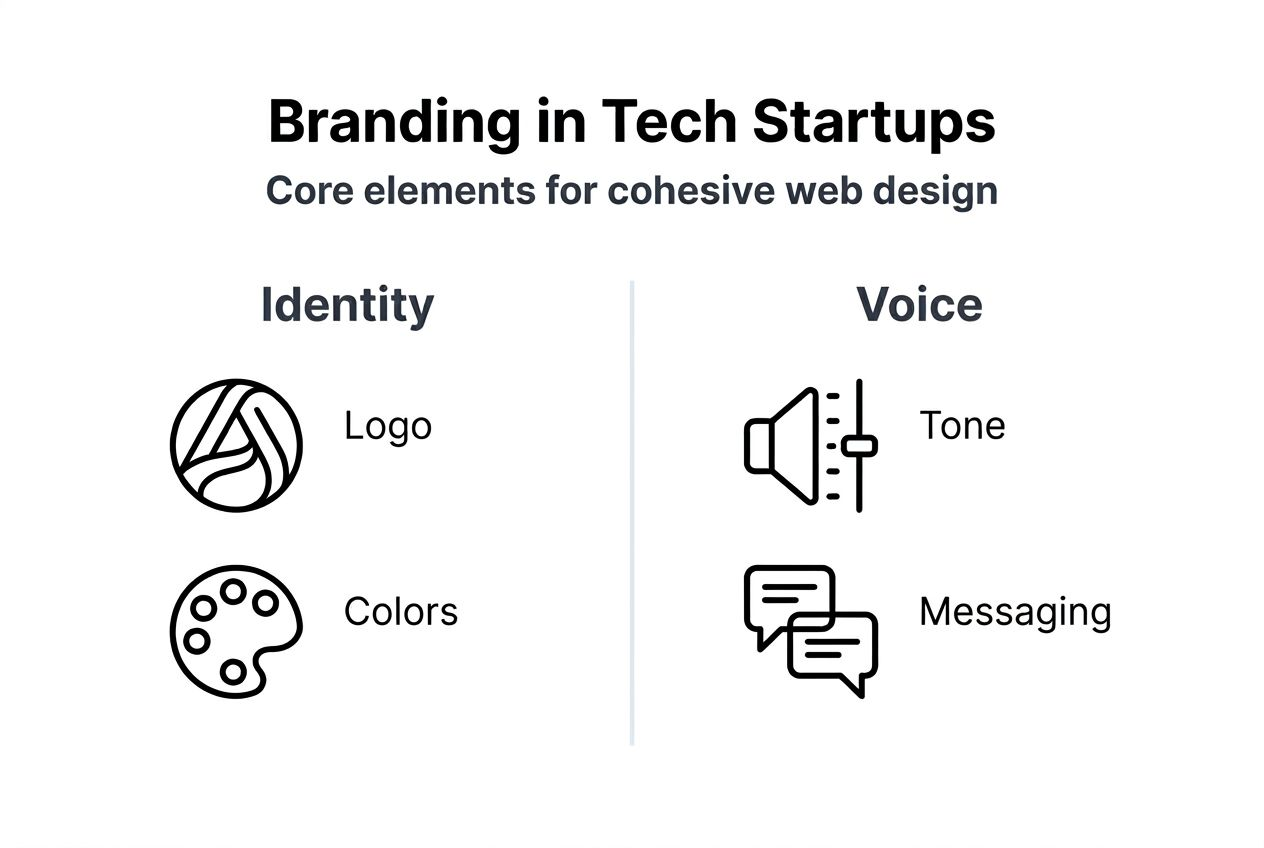
Branding in web design extends far beyond your logo and color palette. For tech startups, it encompasses visual identity, messaging tone, and user experience consistency. Branding is more than logos; it includes tone, messaging, and how users feel navigating your site.
First impressions happen in milliseconds. Your typography, layout, and color choices instantly communicate professionalism and trustworthiness. Users decide whether to stay or leave based on these visual and experiential cues.
Key branding components for startups include:
- Logo and visual mark that represents your mission
- Color palette aligned with industry expectations and emotional goals
- Typography that balances readability with personality
- Voice and messaging tone consistent across all touchpoints
- User experience patterns that reinforce brand values
These elements work together to create a cohesive brand experience. When one component contradicts another, users notice immediately. Your visual identity must match your messaging, and both should support smooth user journeys that feel intentional and trustworthy.
The psychological impact of branding in web design
Your brain processes visual information incredibly fast. Users form opinions about your website in approximately 50 milliseconds, largely influenced by branding elements. Colors, fonts, and layout trigger immediate emotional responses that determine whether visitors trust you.
Emotional connections drive loyalty. When branding resonates with users, they return 27% more often than visitors who experience generic designs. Narrative storytelling woven into design elements can boost engagement by 50% for startups, transforming passive browsers into active participants.
Strong brand identity aligned with web design improves user trust, which can raise engagement metrics like session duration by up to 30%. Trust isn't built through aesthetics alone. It emerges from cohesive experiences where every interaction reinforces your brand promise.
"Trust extends session durations and reduces bounce rates because users feel confident exploring your content when branding signals professionalism and consistency."
Branding creates emotional experiences, not just visual appeal. When users feel understood and valued through thoughtful design choices, they engage more deeply with your content and offerings. This psychological connection translates directly into business metrics like conversion rates and customer lifetime value.
Common misconceptions about branding vs design
Many startups confuse branding with flashy design. They invest heavily in eye-catching visuals while neglecting voice, messaging, and emotional engagement. This approach backfires more often than it succeeds.

Branding encompasses far more than visual style. It includes how you speak to users, what emotions you evoke, and whether your experience aligns with their expectations. Startups focusing excessively on flashy visuals often reduce brand recall by up to 40% due to lack of coherent messaging.
Consistent brand messaging delivers measurable results. When your tone, visuals, and user experience align, conversion rates improve by 23%. Strategic messaging outperforms purely decorative design every time.
Common pitfalls startups face:
- Prioritizing aesthetics over clarity and usability
- Using trendy design elements that contradict brand values
- Changing visual identity frequently without strategic rationale
- Ignoring how messaging tone affects user perception
- Failing to test whether design choices support business goals
"Coherence beats creativity when creativity sacrifices clarity. Users need to understand who you are and what you offer within seconds."
Your design should express your brand, not overshadow it. When visuals distract from your message, users leave confused. Focus on strategic consistency rather than impressive animations or complex layouts that serve no functional purpose.
Frameworks for integrating branding with UX/UI design
Effective branding requires a structured approach. A framework model for integrating branding includes pillars of brand clarity, visual identity coherence, user experience alignment, and continuous optimization. This framework ensures every design decision supports your brand strategy.
The four pillars for tech startups:
| Pillar | Focus | Implementation |
|---|---|---|
| Brand clarity | Define values and voice | Document mission, audience, and messaging guidelines before any design work |
| Visual coherence | Consistent identity | Create design systems that maintain uniformity across all pages and platforms |
| UX alignment | Experience matches personality | Ensure navigation, interactions, and content flow reflect brand character |
| Continuous improvement | Measure and optimize | Track metrics and gather feedback to refine branding effectiveness over time |
Implementation steps:
- Define your brand values and voice clearly before starting design work
- Develop a comprehensive design system that documents colors, typography, and component patterns
- Align every UX/UI choice with your brand personality to create emotional connections
- Establish measurement frameworks that link branding decisions to business outcomes
- Create feedback loops with users to identify where branding enhances or hinders their experience
Pro Tip: Prioritize user-centric feedback loops to refine brand experience. Schedule quarterly reviews where you analyze both quantitative metrics and qualitative user feedback to identify branding opportunities.
This framework prevents common mistakes like inconsistent messaging or visual elements that contradict your values. It transforms branding from a one time project into an ongoing strategic advantage that evolves with your startup's growth.
Case studies and real-world examples
Real startups prove that strategic branding drives measurable business results. A tech startup that redesigned its website to align closer with its brand voice and visual identity saw a 40% uplift in lead conversion within six months. This wasn't about prettier designs; it was about consistency between messaging and experience.
Inconsistent branding leads to 15 to 30% higher bounce rates. When users encounter conflicting visual styles or messaging tones across pages, they lose trust immediately. They assume the company lacks professionalism or attention to detail.
Visual and message alignment directly impacts key business KPIs. Startups that maintain coherent branding across all touchpoints see improved session durations, higher page views per visit, and stronger conversion rates. These metrics translate into revenue growth and customer acquisition efficiency.
Key lessons from successful case studies:
- Consistency across all pages builds cumulative trust that converts visitors
- Clarity in messaging reduces cognitive load and speeds decision making
- Emotional connection through brand storytelling increases engagement depth
- Data validation ensures branding investments deliver ROI
- Iterative refinement based on user behavior outperforms one time redesigns
These examples demonstrate that branding isn't a soft concept. It's a strategic business tool with quantifiable impact on growth metrics. Startups that treat branding as integral to web design outperform competitors who view it as decorative.
Measuring and optimizing the impact of branding in web design
You can't improve what you don't measure. Tracking branding effectiveness requires specific KPIs that connect design decisions to business outcomes. Focus on metrics that reveal how users respond to your brand experience.
Key performance indicators:
| Metric | What it measures | Target improvement |
|---|---|---|
| Conversion rate | Users completing desired actions | 15 to 25% increase post optimization |
| Session duration | Time spent engaging with content | 20 to 35% increase with brand alignment |
| Bounce rate | Visitors leaving without interaction | 15 to 30% decrease with consistent branding |
| Brand recall score | User recognition in surveys | 40% improvement with coherent messaging |
Use analytics tools to track user behavior patterns. Heatmaps reveal which brand elements attract attention. Session recordings show where users hesitate or abandon journeys. Combine this quantitative data with qualitative feedback from user surveys and interviews.
Optimization steps:
- Set baseline metrics before implementing branding changes
- Test variations of brand elements through A/B testing
- Gather user feedback on brand perception and emotional response
- Review analytics monthly to identify trends and anomalies
- Implement incremental refinements rather than complete overhauls
Pro Tip: Set up regular branding performance reviews tied to business goals. Schedule quarterly sessions where you analyze how branding metrics correlate with revenue, customer acquisition cost, and lifetime value.
Balance aesthetic appeal with measurable business outcomes. Beautiful design that doesn't convert wastes resources. Functional design without emotional resonance fails to build loyalty. The sweet spot combines visual excellence with strategic purpose, validated through continuous measurement and optimization.
Discover expert web design services for branding success
You've learned how branding transforms web design from decoration into a strategic business asset. Implementing these frameworks requires expertise in both design craft and conversion optimization. Professional designers translate brand values into effective websites that drive measurable results.
Expert designers align visuals, messaging, and user experience to create cohesive brand experiences that convert visitors into customers. They balance aesthetic excellence with functional performance, ensuring your website looks exceptional while delivering business outcomes. For tech startups ready to leverage branding for growth, explore tailored web design solutions that combine clean development with conversion focused user experience.
FAQ
What is the difference between branding and web design?
Branding is your overall identity and messaging, encompassing voice, values, and emotional connection. Web design is the tool that expresses branding visually and functionally through layout, colors, typography, and interactions. Branding guides what you say; design determines how you say it.
How does consistent branding improve conversion rates?
Consistent branding builds user trust by reducing hesitation and cognitive load. It reinforces recognition and credibility across every touchpoint, leading to up to 23% higher conversions. When users encounter coherent messaging and visuals, they feel confident making decisions and taking action.
What are common mistakes startups make with branding in web design?
Startups often focus too much on flashy visuals without clear messaging, reducing brand recall by up to 40%. They ignore measurement of branding impact and user feedback, missing optimization opportunities. Lack of alignment between brand values and user experience creates confusion that drives visitors away.
How can I measure the impact of branding on my website's performance?
Monitor KPIs like session duration, bounce rate, conversion rates, and brand recall through surveys. Use analytics tools to track user behavior patterns and identify where branding enhances or hinders experience. Continuously optimize design and messaging based on quantitative data and qualitative feedback.